
Manchester, CT · Garage Door Service
Spring Repair for Farmington's Newer Housing Stock
Torsion spring repair for Farmington homes built mostly after 1980. Manchester Garage Door Co travels the 17 miles to fix or replace what original hardware can't handle anymore.
- Repairs & new doors
- Springs & openers
- Serving 6 nearby communities
The DIY Question
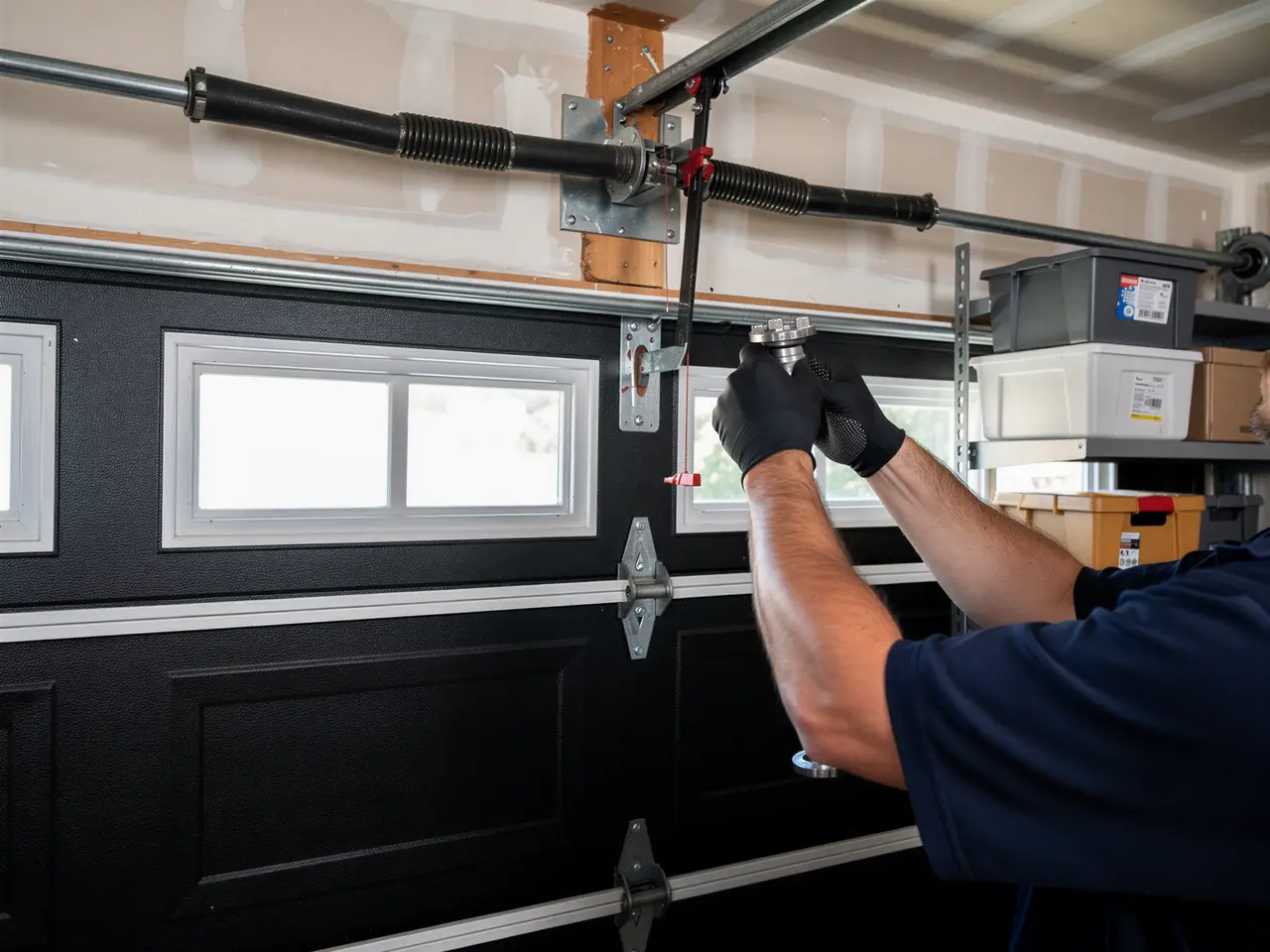
Farmington's median household income is $134,237, well above the $104,976 median across the rest of the service area we cover from Manchester. That number matters more than it sounds like it should, because it changes the repair-or-replace math. A household at this income level is usually better off paying for a full torsion spring replacement done right than chasing a cheaper patch that fails again in two years. YouTube will tell you a spring swap is a $40 part and an afternoon. It isn't, not safely - a wound torsion spring under tension can break a wrist or worse, and the winding bars and cones most homeowners don't own are exactly the tools that keep that from happening. At Farmington income levels, the labor cost of a professional spring job is a small fraction of a month's budget. It is not the place to save money by improvising with a borrowed socket wrench and a ladder. If you're set on doing it yourself anyway, at minimum match the spring's wire size and wind direction exactly - guessing is how doors come down on people.
How Long You Are Without the Door
We run out of Manchester, about 17 miles from Farmington. That's not a same-hour fix - it's a drive, and it means a broken spring here sits broken longer than it would for a house two streets from our trucks. Plan around that. If a spring snaps on a double door and the door won't open, don't force it by hand or with the opener; you'll strip the opener's gears trying to lift against dead weight it was never built to move alone. Call, describe what you're seeing, and expect the job to be scheduled around the drive, not around an instant arrival. We're not pretending otherwise - a depot in Manchester means Farmington waits a bit longer than the neighborhoods closest to it.
Why This Fails Locally
Most of Farmington's housing dates to around 1980, noticeably newer than the 1938-1990 range and 1972 median across the wider area we serve. That later build era usually means steel sectional doors on extension or torsion springs rather than the older one-piece wood doors you'd find on 1950s housing stock closer to Manchester. The hardware is more standard, parts are easier to source, and the failure mode is more predictable: torsion springs wound and re-wound through decades of New England winters eventually fatigue and snap. The region sits in a cold, severe climate band, and that cold matters for springs specifically - steel contracts, lubricant stiffens, and a spring already near the end of its wind cycles is more likely to go in January than in July. Farmington's newer stock doesn't mean newer springs; original hardware installed around 1980 is now over forty years into a job it was rated for maybe ten to fifteen years of cycles.
What Can Go Wrong
A torsion spring doesn't always break clean. Sometimes one side goes and the other holds, which leaves the door racking sideways in the track - that's worse than both springs failing at once, because the door looks like it might still work and people try to run it anyway. On double doors, a single broken spring on a wide panel puts real strain on the opener and the track hardware in a way a single door never sees. Extension springs, if your house has them instead of torsion, can also snap their safety cable, and without that cable a spring under tension becomes a projectile across the garage. None of this is Farmington-specific hardware trivia - it's what happens to any spring at the end of its life, in a house with the kind of late-20th-century steel door construction common here.
What You Are Seeing
A loud bang from the garage, usually when no one's touched the door, is almost always a spring letting go. After that you'll notice the door feels far heavier when you lift it by hand, or the opener strains and stalls partway up. Look at the spring itself, above the door on the torsion bar - a clean gap in the coil means it's broken. If the door is crooked in its track, hanging lower on one side, that's one spring still holding while the other has failed, and it needs attention before someone tries to force it through a full cycle.
Frequently asked questions
How much more does a spring repair cost in Farmington than closer to Manchester?
The repair itself costs the same regardless of address - parts and labor don't change with distance. What can differ is scheduling, since we're driving about 17 miles from Manchester to reach Farmington, so the job gets planned around that drive rather than squeezed in as a same-hour stop.
Are Farmington's garage door springs different from older homes nearby?
Not in kind, but often in condition. Farmington's housing is mostly from around 1980, later than the 1938-1990 range typical across the wider area, so you're more likely to find standard steel door torsion hardware than older one-piece wood doors - but those springs are still decades past their rated cycle count.
Is it worth fixing an old spring or should I replace the whole door?
If the door panels, track, and opener are sound and it's just the spring that's gone, repair is almost always the cheaper and faster call. Replacement makes more sense when the door itself is warped, rusted through, or the opener is failing alongside the spring - fixing one part on a dying door just delays the next failure.
Why does cold weather make springs snap more often?
The region sits in a cold, severe climate band, and steel springs stiffen and lose some flex as temperatures drop. A spring that's already near the end of its working life, weakened by years of winding and unwinding, is more likely to give out on a cold morning than during warmer months.
More garage door services in Farmington
Book garage door service in Manchester
Call now or request a quote - tell us what the door is doing and where you are.