
Manchester, CT · Garage Door Service
Panel Replacement for Farmington's Newer Housing Stock
Panel replacement for Farmington's 1980s-era garage doors, serviced from Manchester 17 miles away. We match panels to the non-standard sizes common in this stock.
- Repairs & new doors
- Springs & openers
- Serving 6 nearby communities
The DIY Question
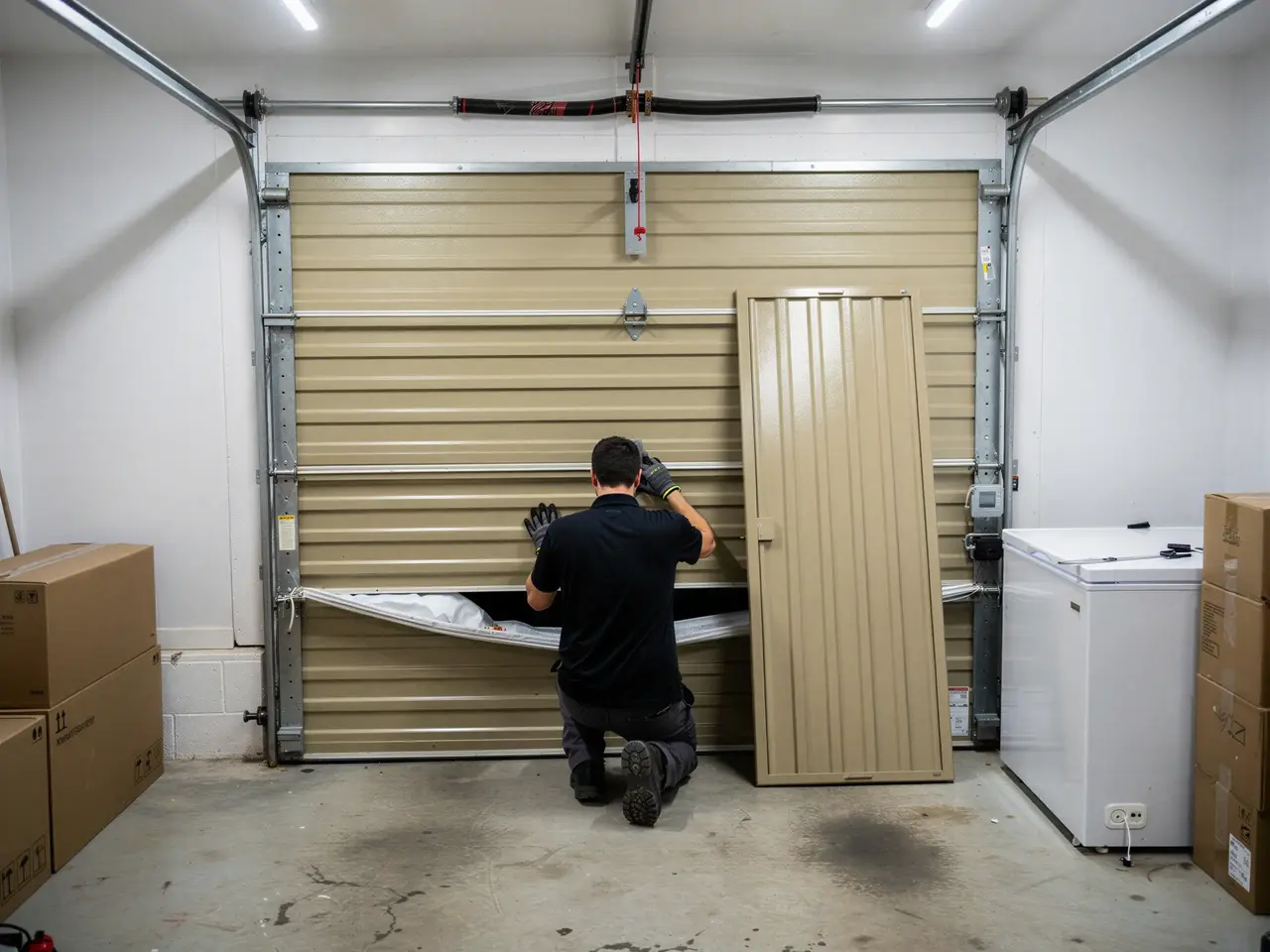
Farmington has about 10,963 households, smaller and tighter-built than the wider service area, and most of the garage doors we see here came in with houses put up around 1980 - newer than the 1972 median across the rest of the territory we cover from Manchester. That later build date matters for a DIY panel swap. By 1980, builders had mostly moved off the old flat steel panels toward foam-core sections with different screw patterns and section heights, so a panel pulled from a big-box store rarely bolts straight onto a door from this era without trimming hinges or re-drilling stile holes. You can replace a single dented panel yourself if you've got the right torx bits and a second set of hands to hold the section plumb while you fish the end hinges through. What you can't easily do alone is match the panel to a section run that's been discontinued, which is common enough on doors this age that we always check the full panel stack, not just the one that got hit, before ordering.
How Long You Are Without the Door
We travel to Farmington from Manchester, about 17 miles each trip, so the honest limitation here is that we don't keep a local stock of replacement panels sitting in this town - what goes on your door comes out of the truck or gets ordered to match what's already there. If your section is a common width and a common color, that's one visit. If it's a discontinued foam-core panel from a 1980-era door, the panel itself can take longer to source than the drive does, and we'll tell you that on the first visit rather than let you assume it's a same-day fix.
Why This Fails Locally
The median income across the broader service area is $104,976; in Farmington it runs closer to $134,237, and what that buys, housing-wise, is more doors from the same building wave - wider two-car openings, taller sections, and insulated cores rather than the bare single-skin steel you'd find on a 1950s one-piece door elsewhere in the territory. Those insulated panels matter under the climate band this whole area sits in, which runs cold and severe through the winter. A foam-core panel that's cracked or delaminated at the seam isn't just cosmetic - it's the thermal break for the whole door, and once moisture gets into that gap and freezes, the crack spreads fast. On a door built to 1980s spec, one failed panel at the bottom section, the one that takes road splash and ice, is usually the one we're called out for, not the top panels, which tend to just dent.
What Can Go Wrong
The biggest risk on these doors is matching a new panel to old hardware. A 1980-built door has had over forty years for its track to wear slightly out of true, and bolting a fresh, square panel into a rack that's drifted even a little can bind the rollers or put torque on the end hinges that weren't designed for it. We've also seen owners order a panel by color name alone, not realizing the finish on a door this old has faded enough that the new section looks noticeably different until the whole door gets a wash and the sun fades it in. Neither of those is dangerous, just disappointing, and both are avoidable if someone checks the track alignment and takes an actual paint sample before the order goes in.
What You Are Seeing
Most of the calls we get in Farmington are for a single bottom panel that's buckled from an impact, a crack running along a foam-core seam after a hard freeze, or a section that's pulled away from its end stile because the screws stripped out of softened wood or corroded steel backing. On doors from this build period, cracking tends to show up at the seam between sections rather than in the middle of a panel, since that's where the insulation core is weakest. If you're seeing daylight at a seam or a section that flexes visibly when the door runs, that's a panel problem, not an opener problem, and it's worth getting looked at before the crack widens enough to let a roller pull loose.
Frequently asked questions
Do you carry panels for 1980s-era doors on the truck?
Not as standard stock - Farmington's doors tend to run foam-core sections from that build era, and we match the panel to what's already on your door rather than carrying a universal size. We confirm the panel on-site, then order if it's not something we're carrying that trip.
Why does only my bottom panel need replacing?
The bottom section takes the most impact and the most moisture, which on an insulated 1980s-style door means it's also the first to crack at the seam once freeze-thaw cycles get into a chip. The upper panels usually just dent rather than crack through.
Is it worth replacing one panel or the whole door?
If the track is still true and the rest of the panels are sound, one panel is usually the right call. If we find the track has drifted enough that a new square panel won't sit right, we'll say so rather than sell you a panel that binds.
More garage door services in Farmington
Book garage door service in Manchester
Call now or request a quote - tell us what the door is doing and where you are.