
Manchester, CT · Garage Door Service
Attached or Detached: Why It Changes the Garage Door Job in Manchester
Manchester's housing mostly dates 1938-1990, with detached garages built separate from the house and attached garages tied to the frame. Here's what that split means for your door.
- Repairs & new doors
- Springs & openers
- Serving 6 nearby communities
What Local Conditions Do
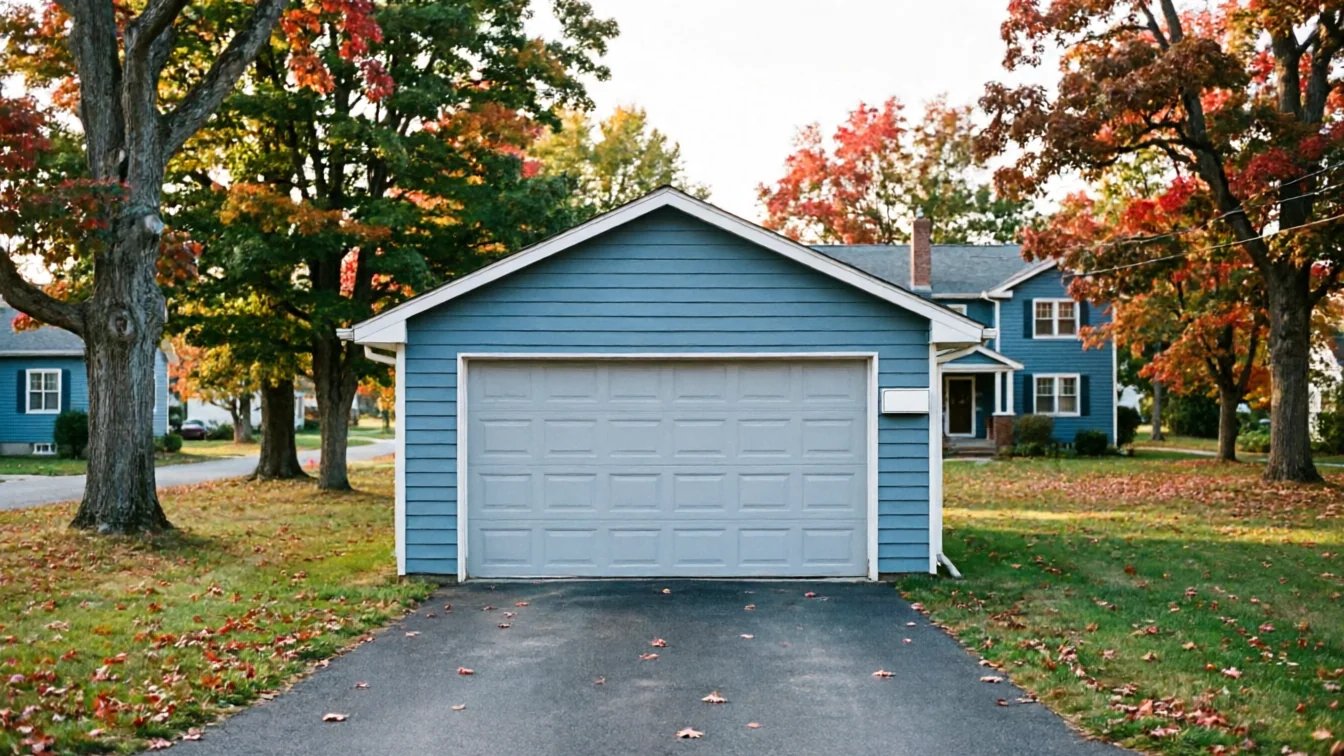
Manchester's housing stock mostly went up between 1938 and 1990, with the bulk of it dating to the 1960s and '70s. That era split pretty evenly between two garage setups: a detached garage sitting apart from the house, often on its own slab with its own framing, and an attached garage built right into the house structure. The difference matters more than people think. A detached garage from that period usually has a simpler stud wall and less insulation behind the track hardware, because nobody worried about heat loss into a space you weren't living in. An attached garage from the same build years often shares a wall with a bedroom or a mudroom, which means the opener noise, the door seal, and the insulation value all affect the house itself, not just the garage. Connecticut's winters put real cold on both types, but a detached garage with no insulation behind the jamb will show frost and ice buildup on the track faster than an attached one with heated space on the other side of the wall. When we're sizing a new door or diagnosing a stuck track, which setup you've got is one of the first things we ask.
What Is Going On
In a lot of Manchester's older detached garages, the track brackets were fastened straight into bare studs with no backing, because the original builders didn't expect anyone to add insulation or a heavier door later. Decades of cold-weather cycling - contraction at night, slight expansion during a thaw - works those original fasteners loose over time. On attached garages built the same years, the door frame often ties into the house's own foundation and framing, so it moves less, but the shared wall means a failing weatherstrip or a loose panel telegraphs noise and cold air straight into the living space. Severe cold is the constant across the service area, and it treats both garage types the same way at the spring and cable level - hardened grease, slower retraction, more strain on a spring nearing the end of its cycle count. What differs is where the problem shows up first: a detached garage usually tells you with a door that won't seat square in the frame, while an attached garage tells you with a cold spot on the kitchen wall.
Doing Nothing For Now
If your garage is detached and the door still opens and closes evenly, leaving it alone through the winter is a reasonable call - we won't talk you into a repair the door doesn't need. Where it gets risky is ignoring a track that's started pulling away from the studs on an older detached structure, because once that bracket backs out, the door can bind and the opener will keep pulling anyway, which stresses the motor and the panel both. On an attached garage, a worn seal or a hairline gap at the jamb is easy to live with for a season, but with the cold this region gets, that gap is pulling heat out of the attached room on the other side of the wall every day it's left. Waiting is fine when the hardware is sound. Waiting stops being fine once you can see daylight at the frame or hear the opener straining against a door that isn't moving freely.
The Common Mistake
The mistake we see most in Manchester is treating a detached garage door and an attached garage door as the same repair. People order a standard insulated door for a detached garage built in the 1960s without checking whether the original studs and header can actually carry the added weight - a lot of that era's detached framing was built light, for a single uninsulated panel, not a heavier modern door. On the attached side, we see the opposite mistake: owners replace the door but skip the weatherstrip and bottom seal, because the door itself looks fine, and then wonder why the attached room still runs cold all winter. We'll be straight with you here - we don't do structural carpentry, so if your detached garage's framing needs reinforcing before a heavier door goes in, that's a separate call to a carpenter before we hang anything. Get the frame right first; the door is the easy part.
Frequently asked questions
Does it matter if my garage is attached or detached when I call for a repair?
Yes. Manchester has a lot of both, built mostly in the same 1960s-70s stretch, but a detached garage's track is usually fastened into lighter framing than an attached one tied into the house. We ask which you have before we quote a repair, because the fix and the hardware can differ.
Why does my detached garage door feel stiffer in winter than it used to?
Cold hardens the grease in the rollers and tightens metal-to-metal clearances, and a detached garage with no heat source on the other side of the wall feels that more than an attached one. If it's also pulling at an angle, the track bracket may have worked loose from the original studs over the years.
Can I just put a heavier insulated door on my old detached garage?
Maybe, but check the framing first. A lot of detached garages from the 1938-1990 building years were framed for a single lightweight panel, not a heavier insulated door. We'll tell you if the header and jamb look undersized before we install anything that heavy.
Related garage door services in Manchester
More garage door guides
Book garage door service in Manchester
Call now or request a quote - tell us what the door is doing and where you are.