
Manchester, CT · Garage Door Service
Garage Doors Built for Manchester's Cold Winters and Older Housing Stock
Most Manchester homes date to the 1960s-70s, with garage hardware never built for Connecticut winters. We fix springs, tracks, and openers from that era.
- Repairs & new doors
- Springs & openers
- Serving 6 nearby communities
What Local Conditions Do
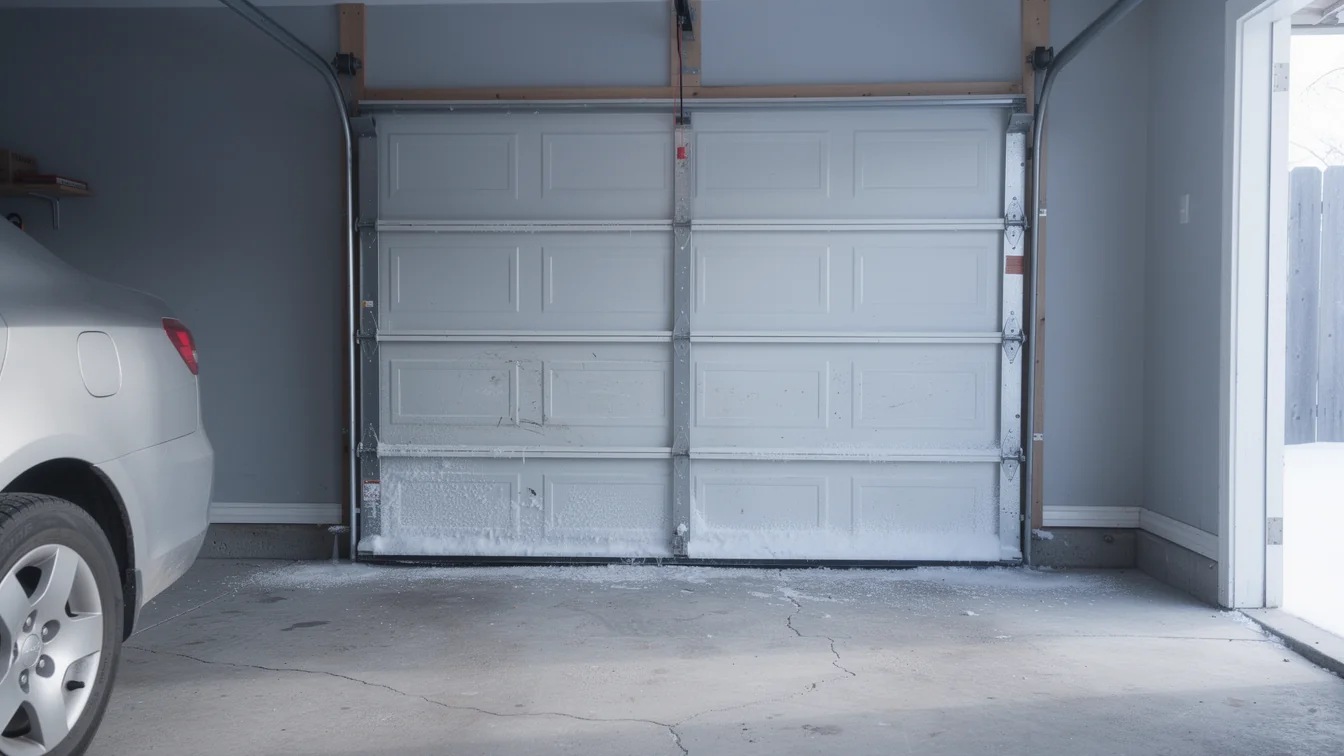
Manchester sits in a cold-climate band rated severe, and that matters more for a garage door than almost any other part of the house. Steel contracts in the cold, grease stiffens, and torsion springs lose tension faster when they cycle through freeze-thaw mornings every winter.
Layer that onto the housing stock. Homes in this area were built mostly between 1938 and 1990, with the median landing around 1972, and the heaviest cluster is that 1960s-70s run you see from Manchester center out toward Bolton and South Windsor. A door and spring system installed in 1968 was engineered to the standards and load expectations of that decade, not to fifty-plus more years of Connecticut winters stacked on top.
So the local condition isn't just "it gets cold here." It's cold weather acting on hardware that's already old by national standards, on a stock of houses where the garage door is often the single most mechanically stressed original part of the structure. That combination is what shows up on our service calls more than anything else.
What Is Going On
When a torsion spring gets cold, the steel stiffens and the wire loses some of its flex before it ever breaks. On a 1960s-70s installation, that spring was already sized for a lighter, often uninsulated steel panel door, not for the heavier doors, openers, and accessories homeowners have added since. Add forty-plus winters of expansion and contraction and you get fatigue well past what the spring's rated cycle count ever accounted for.
Tracks tell a similar story. Original steel track brackets from that era were fastened to framing that has since shifted with the house, and cold makes the metal brittle enough that a track already slightly out of plumb binds harder in January than it does in July. Lubricant that was fine in a 1970s garage turns to paste at low temperatures if it hasn't been serviced.
None of this is dramatic failure on its own. It's slow wear that cold weather exposes faster than it would in a milder climate, on hardware that was never built with a fifty-year service life in mind.
Doing Nothing For Now
Here's the honest part: not every door needs work right away, and we won't tell you otherwise. A door that's stiff in January but opens fine the rest of the year can often wait.
But there's a real limitation worth naming. Parts for original 1960s-70s hardware are not always something we can source quickly, and in some cases a specific bracket, drum, or track profile from that era isn't made anymore at all. When that happens, repair stops being the faster or cheaper option, and replacement becomes the practical one, not because we'd rather sell a new door but because there's no part to put in.
Given a median household income of $104,976 across this service area, a lot of homeowners here do choose to replace rather than keep chasing parts for a fifty-year-old system, especially once a spring has already failed once. That's a judgment call specific to the house in front of us, not a rule we apply across the board. Waiting a season rarely costs you anything. Waiting past a second spring failure usually does.
The Common Mistake
The mistake we see most is homeowners spraying household oil or WD-40 on a stiff torsion spring and calling it fixed. It loosens the squeak for a week, then the spring seizes again, usually on a colder morning than the last one.
The real issue, especially with the 1960s-70s stock common from Manchester through Bolton and Rockville, is that these springs have usually already logged more open-close cycles than they were rated for when new. Lubricant doesn't add cycles back. It just masks the noise the spring is making on its way out.
The fix isn't a different lubricant, it's accepting that a spring from that era, on a door that's been opened twice a day for fifty winters, is past the point where maintenance extends its life. Swapping it before it snaps under tension, rather than after, is the difference between a planned call and an emergency one on the coldest morning of the year.
Frequently asked questions
Why does my garage door get so much harder to open in winter?
Cold stiffens the torsion spring's steel and thickens old lubricant, and on a 1960s-70s installation that spring is often already near the end of its rated cycle life. The combination of age and cold temperature is what makes winter mornings the most common time for a spring to bind or fail outright.
Is it worth repairing a door this old or should I replace it?
It depends on whether parts for the original hardware are still available. If the track or spring system is a profile we can still source, repair usually makes sense. If it's an original part from the 1960s-70s that's no longer made, replacement ends up being the faster and often cheaper route.
How often should I get the hardware serviced given the winters here?
We don't have a universal interval that fits every door, since it depends on age and prior use. What we can say is that houses in this area built in the 1960s-70s era are the ones where we see the most winter-related spring and track calls, so those are the doors worth checking before cold weather sets in.
Related garage door services in Manchester
More garage door guides
Book garage door service in Manchester
Call now or request a quote - tell us what the door is doing and where you are.