
Manchester, CT · Garage Door Service
What Manchester's Housing Age Means for Your Garage Door Springs
Most Manchester houses date to the 1960s and 70s, with original torsion hardware now failing in New England cold. Here's what that means for your garage door.
- Repairs & new doors
- Springs & openers
- Serving 6 nearby communities
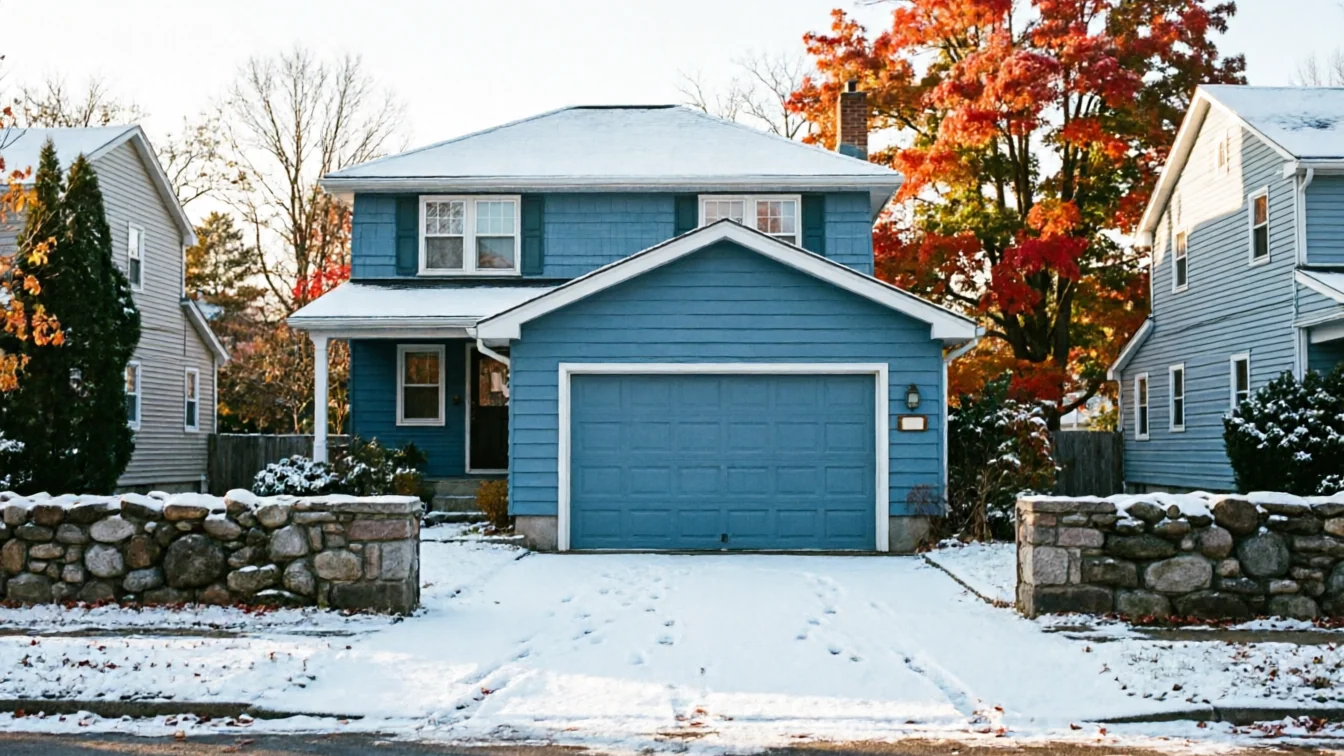
What Local Conditions Do
Manchester sits in a severe cold climate band, and that matters more for a garage door than most homeowners realize. Steel contracts when it's cold, lubricant thickens, and a torsion spring that's already under heavy tension has less give before it reaches its breaking point. That's a problem here specifically because most houses in this area went up between 1938 and 1990, with the median landing around 1972 - meaning a lot of the spring and track hardware behind Manchester garage doors is original 1960s and 70s stock that's never been swapped out.
Across the wider service area's 124,307 owner-occupied houses, that same pattern holds: older torsion setups, older extension springs, and in some cases none of the safety cables that became standard later. Add forty or fifty winters of expansion and contraction to steel that was never built to last forever, and you get a spring that's one cold morning away from going. It's not that the door is used more here than anywhere else - it's that the metal inside it is older and the mornings are colder.
What Is Going On
A torsion spring stores energy by twisting. Every time the door goes up or down, that spring flexes. Over decades, especially decades that include real New England cold, the steel fatigues - microscopic cracks form at the stress points, and the spring gets weaker right up until the moment it doesn't. Cold makes the steel more brittle, so a spring that's been slowly fatiguing for fifty years is far more likely to actually snap in January than in July.
With most Manchester-area houses built in that 1938-1990 window, and the bulk of the stock dating to the 60s and 70s, we're not talking about a handful of outlier homes. We're talking about a large share of the garages in this part of Connecticut running original or close-to-original torsion hardware. Add in worn rollers and dried-out track lubricant from the same era, and a cold snap doesn't just strain the spring - it strains the whole system at once. That's why cold-weather garage calls cluster the way they do: it's old steel meeting hard cold, not bad luck.
Doing Nothing For Now
Not every noise means you need a truck out this week. If your door is just a little stiffer or louder on a cold morning, that's often normal - the opener is fighting thicker lubricant and a less flexible spring, and it'll ease up as the day warms. We won't tell you to replace a spring that's still doing its job just because the calendar says it's old.
Where waiting gets risky is when a spring that's already fatigued finally lets go. A spring under full tension failing on a cold morning can whip a cable or crack a panel, and it tends to happen without much warning. If your door is from the original 1960s or 70s build-out of this neighborhood and you've never had the springs looked at, that's the one thing worth not putting off - everything else on this list can usually wait for a convenient day.
The Common Mistake
The mistake we see most is homeowners treating a stiff winter door as a lubrication problem. Spraying the track helps the rollers move easier, but it does nothing for a spring that's lost tension from forty or fifty years of cycling. Lubricant quiets the symptom; it doesn't fix the spring underneath it.
The other version of this mistake is waiting for the spring to fail completely before calling anyone. Given how much of Manchester's housing stock dates to that 1938-1990 window, with a median build year around 1972, a lot of these springs are well past the point where they're degrading quietly rather than holding steady. A spring that's visibly stretched, uneven, or rusted at the coils on a house that old isn't a maintenance item anymore - it's a part that's due, whether or not it's made noise about it yet.
Frequently asked questions
Why do garage door springs break more in winter in Manchester?
Cold steel is more brittle, and Manchester sits in a severe cold climate band. A spring that's already fatigued from decades of use has less flexibility left when the temperature drops, so it's more likely to snap on a cold morning than on a warm afternoon.
My house was built in the 1960s - does that matter for my garage door?
It can. Most houses in this area date to between 1938 and 1990, median around 1972, which means a lot of garages still have original torsion hardware. That's five or more decades of cycling and Connecticut winters on steel that was never meant to last indefinitely.
Can I just lubricate the track instead of replacing the spring?
Lubricant helps rollers and tracks move easier, but it doesn't restore tension to a worn-out spring. If the door is heavy to lift by hand or the opener is straining, the spring itself is the problem, not the track.
Related garage door services in Manchester
More garage door guides
Book garage door service in Manchester
Call now or request a quote - tell us what the door is doing and where you are.