
Manchester, CT · Garage Door Service
What Wind Does to a Wide Garage Door in Manchester, CT
Manchester, CT's 1960s-70s housing stock often has wide garage doors that strain under wind and severe cold. Here's what happens to the track and spring.
- Repairs & new doors
- Springs & openers
- Serving 6 nearby communities
What Local Conditions Do
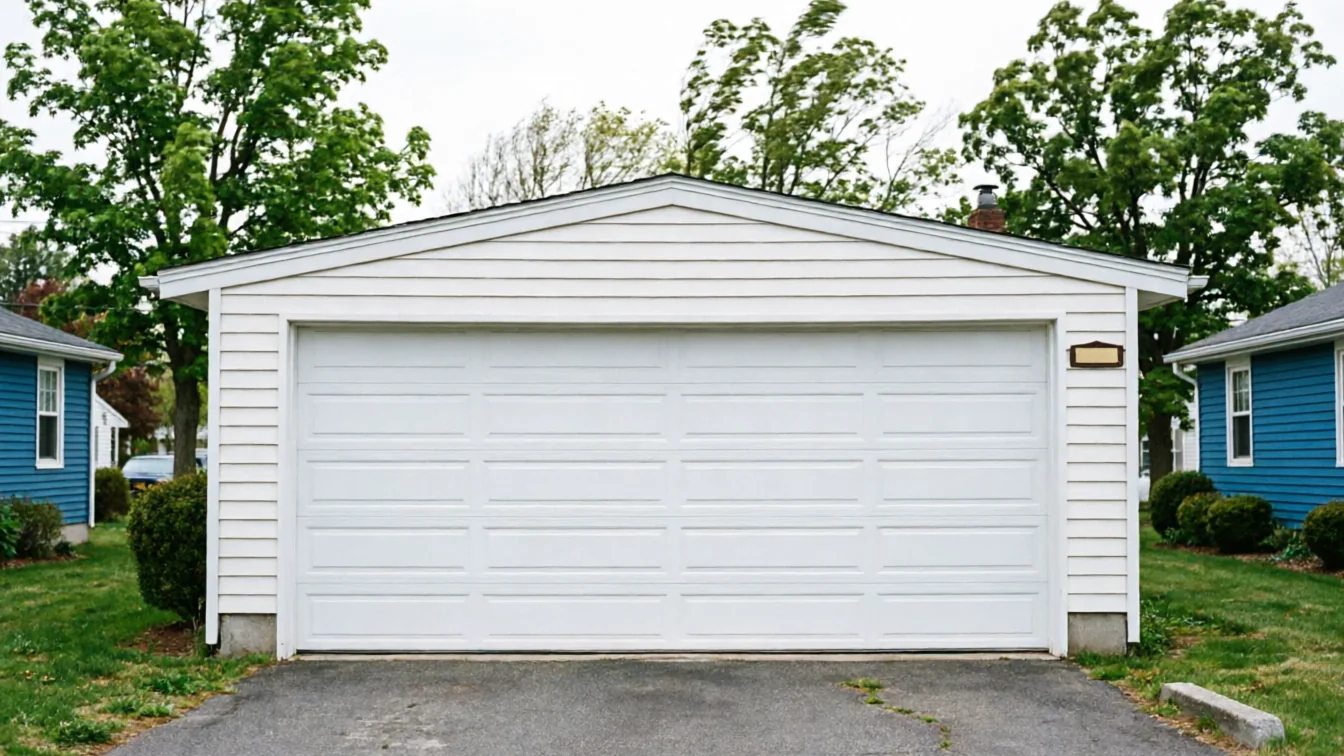
Manchester sits in a COLD severe climate band, and most of the housing stock here went up between 1938 and 1990, with the typical house dating to around 1972. That combination matters more than people think when the door in question is a wide one - a single 16-foot double door instead of two 8-foot singles. A lot of ranch and colonial houses built across Manchester's 59 named neighborhoods and villages used that one-wide-door layout, and it's still the layout you find on most of them today.
A wide door has more surface area pushing and pulling against the track every time the wind catches it, and it has no center post to split that load the way two single doors do. Cold makes the problem worse, not because the wind itself is colder, but because the steel track brackets, the hinges, and the torsion spring all stiffen and lose clearance in deep cold. A door that flexes an inch under gusts in July can flex closer to an inch and a half once the hardware has contracted in January. On a door this old, that difference is often the one that pulls a bracket loose from framing lumber that's already been through fifty-some winters.
What Is Going On
The mechanism is simple once you see it. Track brackets are lag-bolted into the wood framing around the opening. On a house built in the 1960s or 70s, that framing has gone through decades of seasonal movement - shrinking, swelling, drying out - and the fasteners have backed off a little even if nobody ever noticed. Add wind load to a wide door with a long, unsupported track span, and the brackets flex a few extra degrees every time a gust hits. Do that often enough through a Manchester winter and the lag bolts start to pull, the track edges toward the opening, and rollers run rough on one side before they ever come off entirely.
This isn't a problem unique to one street or one subdivision - with housing stock this consistent in age across the area, it shows up anywhere the original 16-foot door and original track hardware are still in place. Newer doors built after later code updates generally carry heavier track gauge and reinforcement struts for exactly this reason, which is part of why the problem concentrates in the older half of the stock rather than across the board.
Doing Nothing For Now
Not every wide door with a little wind flex needs a new track system right away. If the bracket pull is minor and the panels aren't bowing, tightening the lag bolts and adding a reinforcement strut across the top section is often enough, and it's a lot cheaper than a full replacement. We won't tell you to replace a door that doesn't need it.
Where we draw the line is a door where the flex has already started separating rollers from the track or where the panels themselves have begun to bow permanently - once a steel panel built in the 1970s or 80s has taken a permanent set, no amount of bracket tightening fixes it, and waiting through another Manchester winter in COLD severe conditions just adds another freeze-thaw cycle to the fatigue. That's the point where repair stops being the honest answer and replacement is. We won't know which category a given door falls into without actually looking at the track and the panel seams, which is the one part of this nobody can tell from a phone call.
The Common Mistake
The mistake we see most in Manchester is homeowners addressing the symptom instead of the cause. A door that bangs or shudders in the wind gets new weatherstripping, a quieter opener, or foam panel inserts - all fine things to do, but none of them touch the track bracket or the lack of center reinforcement that's actually letting the door move. With median household income in the service area running a bit above $104,000 and over 124,000 owner-occupied houses across the area, most people here can afford to fix this correctly, and a lot of them do once they know what to look for. The ones who don't usually find out when a bracket finally lets go mid-storm rather than before.
The other version of this mistake is assuming a wide door is simply a worse door and should be converted to two singles. That's a real option, and on some houses it solves the wind problem completely, but it's a structural change to the opening, not a repair, and it isn't something to decide on the strength of one bad winter.
Frequently asked questions
Why does my wide garage door move more in the wind than my neighbor's two single doors?
A wide door spans the full opening with no center post, so wind load has nothing to split it between two frames. On a 16-foot door from the 1960s-70s housing stock common around Manchester, that span relies entirely on the side tracks and their brackets, which flex more under the same gust than a pair of 8-foot doors would.
Is my garage door's age the reason it flexes in the wind?
Likely part of it. Most Manchester housing dates to between 1938 and 1990, with the typical house built around 1972, and track hardware from that era is lighter-gauge than what's used now. Decades of seasonal wood movement around the opening also means the original lag bolts have usually loosened some, even without anyone noticing.
Does the cold actually make the wind problem worse?
Yes. Manchester falls in a COLD severe climate band, and cold stiffens the steel track, hinges, and torsion spring, reducing clearance. A door that flexes a little in summer wind can flex noticeably more once the hardware has contracted in a hard freeze, which is when bracket pull-out tends to show up.
Should I reinforce my wide door's track or just replace the door?
Depends on what's already happened. If the brackets are just starting to loosen and the panels are flat, reinforcing the track and tightening hardware is usually enough and cheaper. If panels have already taken a permanent bow or rollers have come off track, reinforcement won't hold and replacement is the honest answer.
Related garage door services in Manchester
More garage door guides
Book garage door service in Manchester
Call now or request a quote - tell us what the door is doing and where you are.