Manchester, CT · Garage Door Service
Off-Track Garage Door Repair in Windsor, CT
Off-track garage door repair in Windsor, CT, 10 miles from Manchester. Serving Windsor's 1969-era housing stock with extension-spring and track fixes.
- Repairs & new doors
- Springs & openers
- Serving 6 nearby communities
How Long You Are Without the Door
Windsor sits 10 miles from Manchester, which means a call here starts with a real drive, not a quick trip around the corner. That distance factors into how a job runs: our trucks carry common track and hardware, but if yours is a nonstandard length or a piece has been discontinued, that first visit may turn into a measure-and-order instead of a one-trip fix. We don't publish a response time for calls into Windsor because the honest answer depends on the road and the rest of the schedule that day. What we can tell you is that a door off its track isn't something to leave hanging for days - the opener motor can burn out trying to lift a door that's binding, and a panel that's cocked at an angle keeps stressing the same spot until something else gives. If your door is off track right now, get it to a stop (unplug the opener, don't force it) and call. The drive is real, but it's not a reason to let the problem sit.
What It Costs
We're not going to put a number on this page, because an off-track repair for a Windsor door can mean three very different jobs: a roller popped out of the track and needs reseating, a section of track got bent when a car clipped it and needs replacing, or the door came down crooked because a cable jumped the drum and the whole assembly needs resetting. Those are three different price points, and quoting one figure here would just be a guess dressed up as an estimate. What we can say is that Windsor's median household income runs $107,548, which tends to put people in a position to choose a proper repair over a patch job - fixing the track and the hardware that caused it to bend, rather than just shoving the door back on its wheels and hoping. We'll look at the door, tell you what's actually wrong, and give you a number before we start work, not after.
What Can Go Wrong
The typical Windsor house went up around 1969, which puts a lot of these doors on the hardware that was standard then - extension springs mounted along the horizontal track rather than torsion springs on a shaft above the opening. That matters for off-track problems because extension-spring doors travel on lighter steel track that bends more easily if a car bumps it or a kid leans a bike against it. Windsor counts roughly 11,360 households, and a fair share of those still have the original track runs from that era - thinner gauge, older brackets, and roller sizes that don't match what's sold today. The most common way these doors come off track: a roller works loose from a bent track and pops free on one side, so the door hangs crooked instead of sliding square. Cables jumping the drum is the other frequent cause - once a cable slips, the door drops unevenly and can wedge sideways in the track. Both look alarming but are usually fixable without replacing the whole door, as long as the track itself isn't crushed.
What the Repair Takes
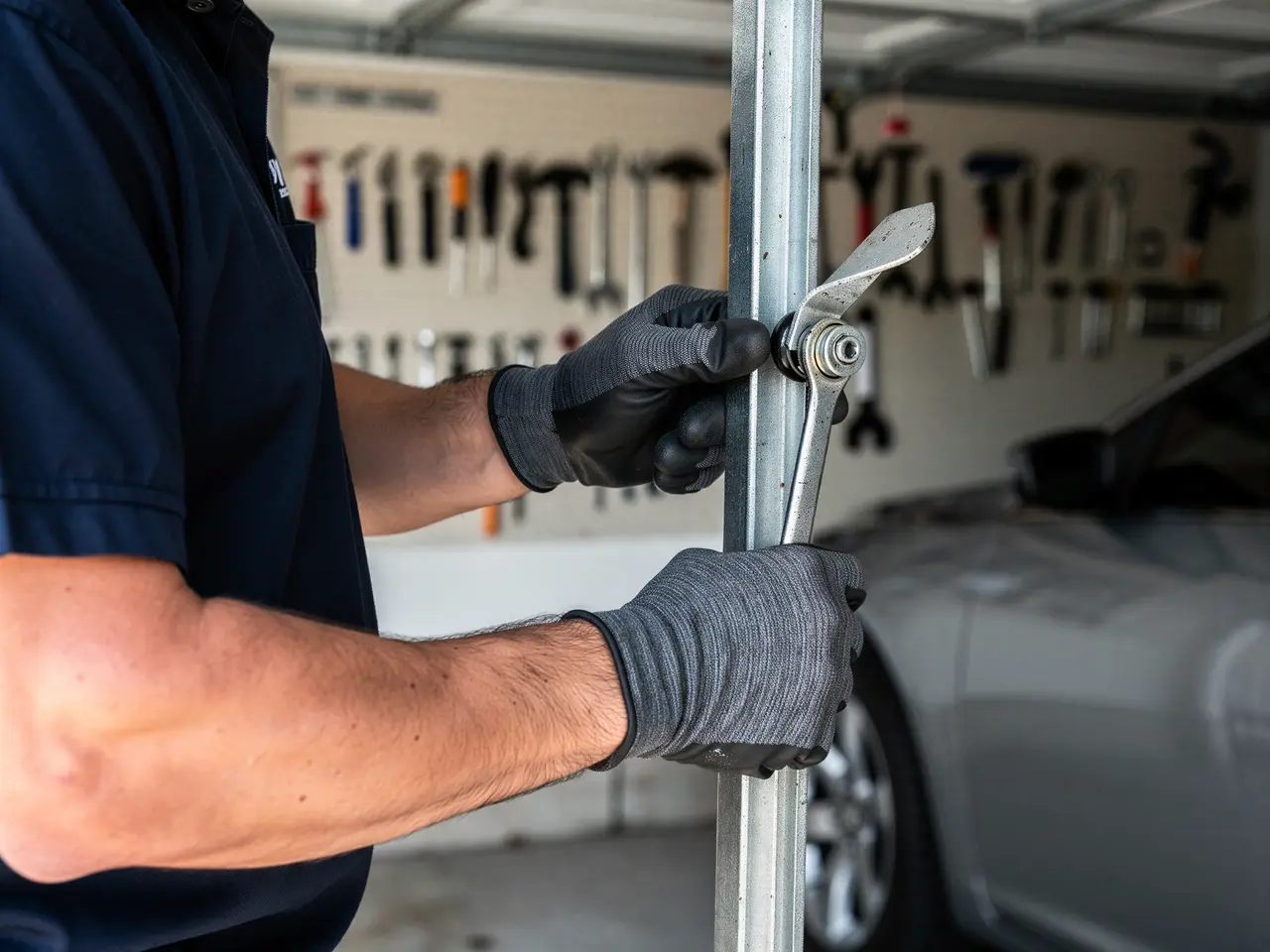
Getting a door back on track starts with figuring out why it left in the first place - there's no point reseating a roller if the bracket behind it is bent, because it'll pop out again within a week. We check the track for straightness first, since a track that's bowed even slightly will keep throwing rollers. If the track's good, it's a matter of releasing tension, guiding the door back into the channel, and checking that it runs square top to bottom. If a section of track is bent or crushed, that section gets replaced and re-shimmed to the frame, not just bent back by hand - bent-back track fails again faster than it did the first time. Cable issues get traced to the drum and the cable itself; a frayed cable gets replaced rather than just reseated, because a cable that's already started to fray on one strand is close to a full break. Most of this is a same-visit fix once we're there and the parts match what's on the truck.
Parts We Carry
The truck stocks standard track sections, rollers in the common sizes, hinges, and cable, which covers most of what comes off the Windsor calls we take. What we don't carry is every length and gauge that was used in houses built in the 1960s and 70s - some of that hardware was never standardized the way it is now, and a few jobs need a section ordered to match what's already on the door rather than swapped for something close. That's the honest limitation: if your track is an odd length or your door uses a roller size that's gone out of production, the first visit is a diagnosis and measurement, and the fix comes on a second trip once the part's in hand. For the common failures - a bent section, a popped roller, a jumped cable - we carry what's needed and the job gets closed out in one visit.
What You Are Seeing
A door that's visibly crooked in the opening, hanging lower on one side than the other, usually means a cable has jumped the drum or snapped. A gap between the roller and the track, or a roller sitting outside the track rail entirely, means it's worked loose - sometimes from a bent track, sometimes just from age and the roller wearing round at the edges. If the door won't move at all and the opener strains against it, stop running the opener; forcing a door that's off track usually bends something that didn't need to bend. A door that scrapes or binds partway up, rather than running smooth the whole distance, often means the track has a slight bow in it even if it looks straight to the eye. None of these are things to keep opening and closing to see if it clears itself - an off-track door that's still used tends to get worse at the point of failure, not better.
Frequently asked questions
How far is Windsor from your Manchester shop?
About 10 miles. We don't operate a branch in Windsor; every call is dispatched from Manchester, and the drive is factored into the day's schedule rather than a fixed response window.
Why do so many Windsor doors use extension springs instead of torsion springs?
Most Windsor houses date to around 1969, when extension-spring track hardware was the standard setup. Torsion systems became more common later, so older stock across town still runs the original style, which affects how the track and rollers behave when a door comes off.
Can I just push the door back onto the track myself?
You can try to reseat a roller that's barely off, but if a cable's involved or the track is bent, forcing it can bend the frame further or snap a cable under tension. Better to stop and call before you turn a small fix into a bigger one.
Will you have the parts on the truck for my door?
For common track lengths, rollers, hinges, and cable, yes. Older or nonstandard sizes used in some Windsor houses from the 1960s and 70s sometimes need a second visit once we've measured and ordered the right match.
Book garage door service in Manchester
Call now or request a quote - tell us what the door is doing and where you are.