
Manchester, CT · Garage Door Service
Spring Repair for Tolland's Newer Housing Stock
Tolland homes mostly date to 1980, a decade newer than the rest of our Manchester-area service territory. That gap changes which spring and drum setup shows up on the job.
- Repairs & new doors
- Springs & openers
- Serving 6 nearby communities
Booking a Visit
We run this job out of Manchester, about 11 miles away, so there's no local branch to swing by - a call gets a truck headed out, not a same-day guarantee we can't back up from here. When you call, tell us the door's age if you know it; Tolland's housing skews newer than most of the towns we cover, with a median build year around 1980 against roughly 1972 across the wider service area. That ten-year difference tells us a lot about what's likely waiting in the opener housing before anyone touches a spring.
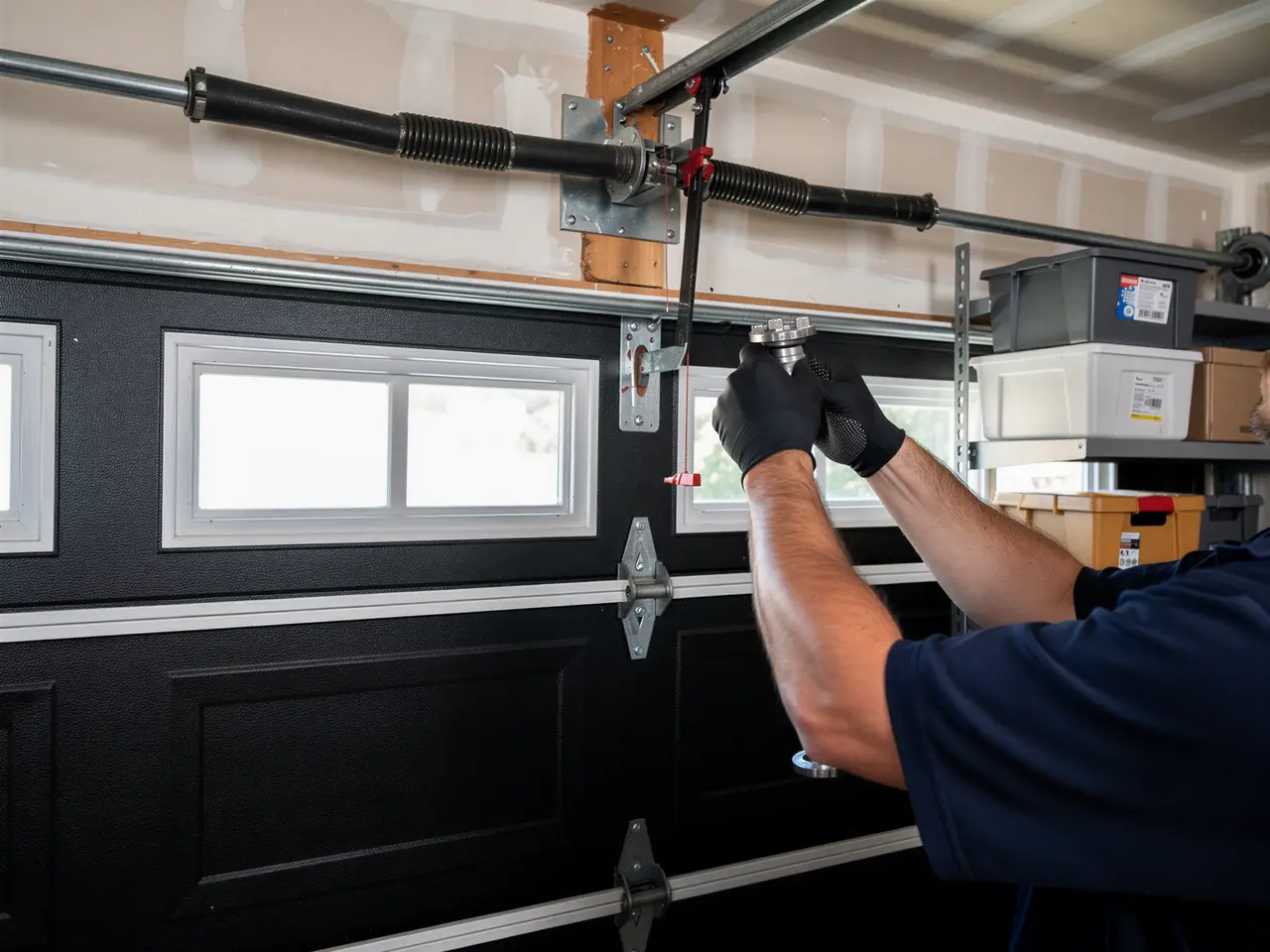
We ask for the door's width and whether it's a single or double door, because that determines spring count and wire gauge before the truck leaves. If you can get a photo of the spring assembly above the door - torsion bar, drums, the cones at each end - send it. It saves a diagnostic trip and lets us bring the right spring instead of guessing from a phone description. We don't keep a Tolland-specific inventory; what's on the truck is sized for the most common torsion setups found in homes built from the late 1960s through the 1980s, which covers most of what we see out this way.
Parts We Carry
Because Tolland's housing clusters later than much of the rest of our territory - median year built around 1980, versus the 1938-to-1990 spread we see region-wide - the springs we pull off these doors are almost always torsion, wound on a shaft above the door rather than the older side-mounted extension pairs you'd expect on a pre-1960s build. We carry standard torsion springs in the common wire gauges and lengths that fit builder-grade door openers installed through the 1970s and 80s.
We don't stock every obsolete extension-spring bracket or the odd stretch spring from a one-piece door - those belong to an older build era that's thinner on the ground in Tolland than in some of the older neighborhoods closer to Manchester. If your door turns out to be one of the rarer older installs, we'll tell you straight that the part may need to be ordered rather than pulled off the truck that day. Most jobs here don't hit that wall, but it happens, and it's worth knowing before we're standing in your driveway.
What Can Go Wrong
This area sits in a cold climate band with severe winter conditions, and that matters more for springs than people expect. Torsion springs lose temper faster when they cycle through hard freeze-thaw swings, and a spring that's fine in October can snap on the first sub-zero morning in January. Cold also stiffens the steel enough that a marginal spring - one that was still holding in fall - finally gives.
The other common failure here is a spring that's simply worn out its cycle count. A door that opens and closes a few times a day for 30 or 40 years has put a lot of flex through that coil, and metal fatigue doesn't care how nice the house looks. We also see cable fraying tied to the same cold-weather stress, since a weakened spring forces the cable to take load it wasn't built to carry alone.
One thing we won't do is replace a spring and call it fixed if the cable or drum shows wear too - swapping one part and leaving a frayed cable next to it just moves the failure a few months down the road.
How Long You Are Without the Door
A straightforward torsion spring swap on a single door is usually a same-visit job once the tech is on site - it's not an overnight repair. Doubles with two springs take a bit longer since both get replaced together, even if only one has broken, because a mismatched pair under different tension is asking for a second failure soon after.
What stretches the timeline isn't the wrench work, it's parts availability. If your door needs a spring size or a drum configuration we don't carry on the truck, that becomes an order-and-return visit instead of a one-stop fix. We'd rather tell you that up front than promise a same-day close we can't deliver from 11 miles out.
In the meantime, a door with a broken spring shouldn't be forced open by hand or by the opener motor - that's how an opener burns out trying to lift weight the spring used to carry. Leave it closed until the tech arrives if you can.
The DIY Question
A torsion spring under tension can put out enough force to break a bone or worse if it lets go while you're working on it, and that's true whether the door is five years old or fifty. We're not going to pretend there's a safe shortcut here. If a spring has snapped, the right move is to leave the door alone and call someone, not to look up a tutorial.
Where homeowners can reasonably do their own work: tightening loose hardware, lubricating hinges and rollers, clearing the track of debris, or replacing weatherstripping. None of that touches the spring system. The honest limit we'll draw is this - we won't talk a homeowner through a spring swap over the phone, and we won't sell parts for a DIY spring job. It's not a cost-saving move that's worth the risk, and we'd rather lose that sale than have it go wrong in someone's garage.
What You Are Seeing
The door looks heavier than usual when you lift the manual release - that's the spring no longer carrying its share of the weight. Sometimes there's a loud bang from the garage, usually a torsion spring letting go all at once; it's startling but it's the spring doing what a worn spring does, not something you caused.
A door that opens partway and stalls, or that the opener strains against with a grinding motor sound, is often a spring that's lost tension gradually rather than snapped outright. You might also notice the door sitting unevenly, slightly crooked in the frame, if one spring on a double-spring setup has gone while the other is still holding.
A visible gap in the coil, or a spring that looks stretched and uneven compared to its original shape, is worth a call even if the door still operates - it's usually close to failing, not years away from it.
Frequently asked questions
Why does my spring keep breaking even though the door still looks fine otherwise?
Springs fail on a cycle count, not a calendar. A door built in 1980 that's opened a few times daily has put decades of flex through that coil, and cold-weather stress out this way accelerates the fatigue. The door can look and move fine until the moment it doesn't.
Do you keep a branch in Tolland?
No. We work out of Manchester, about 11 miles away, and come out for the job rather than keeping local stock or staff in Tolland. There's no local response-time promise we can make from that distance - just a truck dispatched when you call.
Is my door's spring setup unusual for this area?
Most homes here were built around 1980, which generally means torsion springs mounted on a shaft above the door rather than the older side-mounted extension springs found in older housing stock. That's the setup our truck is stocked for on most Tolland calls.
Can I replace a broken spring myself to save money?
We'd tell you not to. A torsion spring under tension can cause serious injury if it releases while you're working near it, regardless of the door's age or size. We don't sell parts for DIY spring jobs or walk anyone through it by phone.
Book garage door service in Manchester
Call now or request a quote - tell us what the door is doing and where you are.