
Manchester, CT · Garage Door Service
Why Manchester Garage Doors Let the Cold In
Manchester homes built mostly 1938-1990 face cold-climate drafts and failing seals. Here's what the housing stock and winters here actually do to garage doors.
- Repairs & new doors
- Springs & openers
- Serving 6 nearby communities
What Local Conditions Do
Most of the housing around Manchester went up between 1938 and 1990, with the median sitting around 1972, and the bulk of it is 1960s and 70s construction spread across the 59 named areas that make up this service territory - Robertson, Buckley, Highland Park, Keeney, Spencer, and the rest. Doors and openers installed when those houses were built, or replaced once in the decades since, are old enough that the original weatherstripping has hardened and shrunk. Rubber that was fine in 1975 doesn't flex the same after fifty winters.
This is a severe cold climate zone. That matters for garage doors specifically because the seal at the bottom, the vinyl between panels, and the flexible seal where the door meets the jamb all depend on staying pliable through repeated freeze-thaw cycles. When they crack or flatten, cold air and moisture get past them and into the garage, and from an attached garage, often into the house. A door that still opens and closes fine can be doing a bad job of sealing against that kind of winter.
On a lot of these older Manchester-area houses, the frame around the opening has also shifted slightly over sixty-plus years, which means a universal replacement seal doesn't always sit flush the way it would on new construction.
What Is Going On
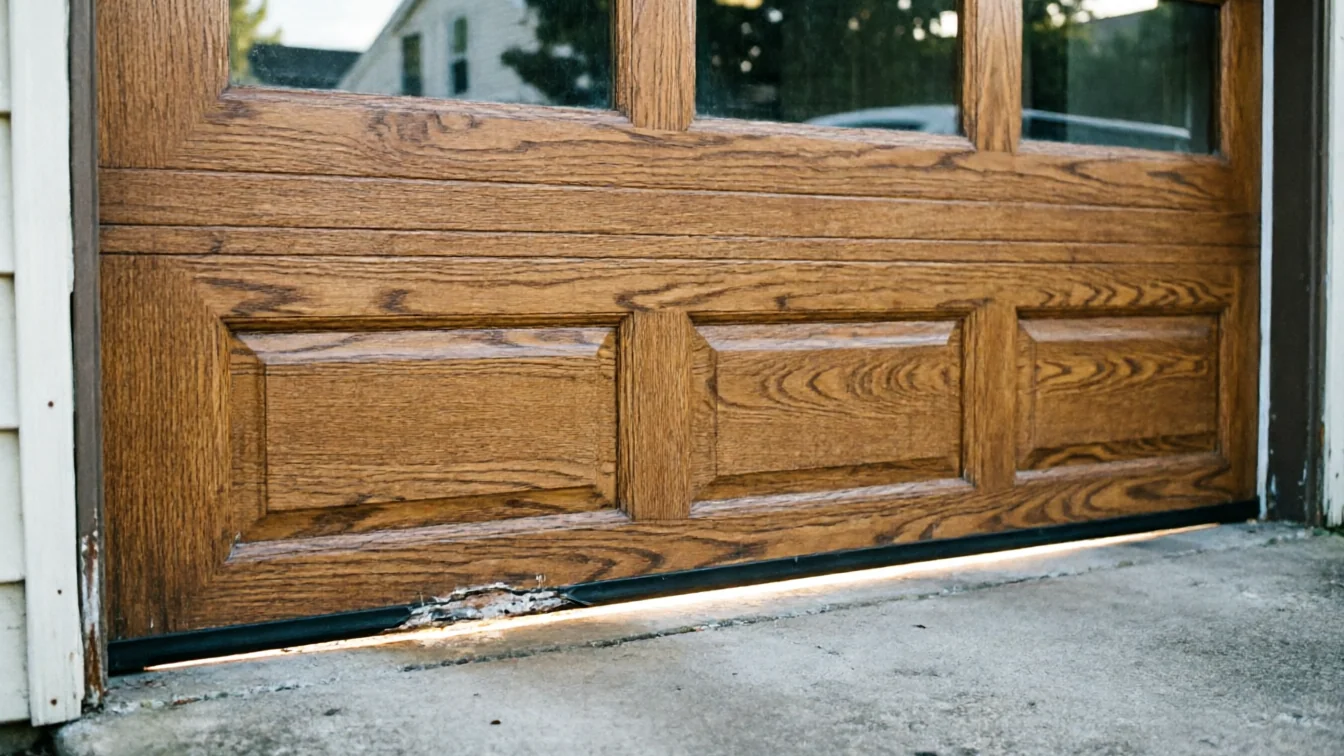
On a house built in the 1960s or 70s, the symptom homeowners usually notice first isn't a broken door - it's a cold garage and a draft along the bottom edge that wasn't there a few winters back. That's the bottom seal failing, and on this vintage of housing it's close to universal once the original seal has never been swapped out. The vinyl gets brittle in sustained cold, and once it cracks it doesn't self-heal come spring.
The second thing that shows up on houses this age is panel seams that have opened up slightly as the door has racked over decades of use, letting drafts through even when the weatherstripping itself is intact. That's a hardware and alignment issue more than a seal issue, and it's common enough on original one-piece and early sectional doors from this era that it's worth checking separately.
Neither of these is dramatic. Nobody's door is falling off the track. But in a severe cold climate, a garage that's meant to buffer the house from outside temperatures stops doing that job, and anyone with living space or plumbing near or above the garage feels it directly.
Doing Nothing For Now
Not every drafty door needs a service call right away. If the seal is just starting to flatten and the garage isn't heated or attached to living space, you can often get another season out of it, especially if the door itself is mechanically sound. Leaving it a while longer isn't a crime.
What we'd flag is the point where you can see daylight under the door, or feel moving air along a side seal with your hand - at that stage, in a climate that runs this cold, you're not just losing comfort, you're inviting condensation and frost buildup on anything metal nearby, including springs and track hardware. That's when deferring starts costing more than it saves.
We also won't tell you to replace a door that just needs a seal. A full door swap on housing stock this old sometimes makes sense because the frame's shifted enough that nothing seals right, but plenty of the time it's a seal and a bit of track adjustment, nothing more.
The Common Mistake
The mistake we see most in this part of Manchester is someone replacing the bottom seal, feeling the draft stop at floor level, and assuming the job's done - when the real air leak on a lot of these 1960s and 70s doors is actually at the top panel or along a side seal that never got checked. Houses from this era often have the original track and jamb seals still in place even after a bottom seal has been swapped once or twice over the years, simply because the bottom one is the part people can see and reach.
The honest limitation here: we can't tell you which seal is failing on your specific door without looking at it, and we're not going to guess over the phone and sell you a part you might not need. A five-minute look at the door tells us more than a description does. If it turns out to be a frame issue from decades of settling rather than a worn seal, that's a different conversation, and sometimes a more involved one than a strip of vinyl.
Frequently asked questions
Why is my garage so cold even though the door looks fine?
On houses built in this area between 1938 and 1990, the original weatherstripping is often still in place and has hardened with age. A door can look undamaged and still let cold air through at the bottom, sides, or top panel. In a severe cold climate, that gap matters more than it would somewhere milder.
Should I replace the whole door or just the seals?
Depends on the door. Plenty of doors from the 1960s-70s building boom here just need new weatherstripping and a track adjustment. If the frame has shifted enough over the decades that nothing sits flush anymore, replacement can make more sense. We'd need to see it to tell you which situation you're in.
Can I wait until spring to deal with a drafty door?
If it's a minor draft and the garage isn't attached to living space, often yes. Once you can see daylight under the door or feel air moving along a side seal, waiting through a severe cold winter risks condensation and frost on nearby hardware, which costs more to deal with later.
Related garage door services in Manchester
More garage door guides
Book garage door service in Manchester
Call now or request a quote - tell us what the door is doing and where you are.