
Manchester, CT · Garage Door Service
What We Actually Check on a Manchester Service Call
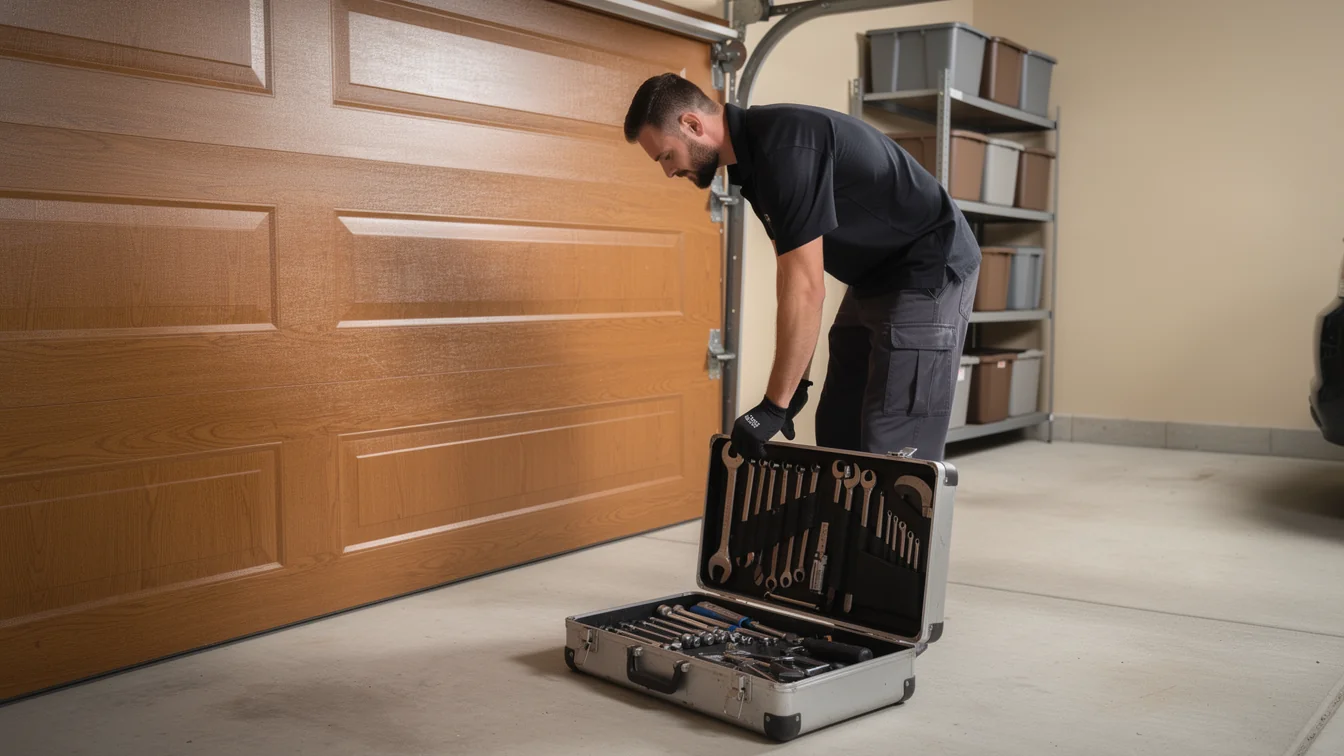
A look at what our techs actually check on a Manchester service call, tied to the 1960s-70s housing stock and cold-climate wear common across this area.
- Repairs & new doors
- Springs & openers
- Serving 6 nearby communities
What Local Conditions Do
Most of the houses we get called to around Manchester went up between 1938 and 1990, with the bulk of that stock dating to the 1960s and 70s. That matters more than people think. A door and opener installed on a house built in 1968 has had five decades of Connecticut winters working on its hardware - freeze-thaw cycles on the track brackets, condensation inside the torsion tube, lift cables that have stretched and re-seated a hundred times. We're in a severe cold climate band here, and that's not a marketing line, it's why the springs on original-era doors are almost always past their rated cycle count by the time anyone calls us. A service call on a house this age isn't a generic inspection. It's a check of parts that were sized for a different era of hardware and have been sitting in a cold garage since before most of our customers owned the place.
What Is Going On
When we show up for a service call, we're looking at the whole lift system, not just the symptom you called about. On a door from the 1960s-70s stock that makes up most of this area, that means checking torsion spring wind count against door weight, inspecting the cable drums for rust pitting, and testing roller travel in tracks that have likely been re-aligned more than once over the years. Cold makes steel brittle and grease stiff, so a spring that's marginal in July can snap in January - that's just physics acting on hardware that's been in a cold garage through fifty-plus winters. We also check the opener's force settings, because an opener fighting a spring that's lost tension will eventually burn out its gear. None of this is dramatic. It's the same handful of wear points on nearly every older door in this area, checked in the same order every time.
Doing Nothing For Now
Sometimes the honest answer on a service call is that nothing needs doing yet. If the springs are within their wind tolerance and the cables show normal wear, we'll tell you that instead of selling you a repair. We won't replace a working torsion spring just because the house is from 1972 - age of the house tells you what to watch, not what to do today. That said, we don't do cosmetic touch-ups or paint matching, and if a track is bent beyond pulling true, we'll say so rather than keep adjusting it. A door that's marginal going into a Connecticut winter is a different conversation than the same door in June, and we'll tell you which one you're having.
The Common Mistake
The mistake we see most with the older housing stock here - the 1938 to 1990 range that covers most of this area - is treating a noisy door as a lubrication problem when it's actually a spring on its way out. WD-40 on a dry roller buys you a few quiet weeks, not a fix. With roughly 124,307 owner-occupied houses across the wider service area and most of them built before 1990, a lot of doors are carrying original or first-replacement springs that are simply at the end of their cycle life. The other common mistake is waiting for a full failure before calling, which usually means it happens on the coldest morning of the year, when steel is least forgiving and we're busiest. A service call early costs less than an emergency call with a door that won't open at all.
Frequently asked questions
Does the age of my house affect what you check during a service call?
Yes. Houses in this area built in the 1960s and 70s commonly still run original-era torsion hardware, so we pay close attention to spring wind count, cable drum wear, and track alignment - the parts that have had the most winters to wear down.
Why do springs seem to fail more in winter here?
Cold makes steel more brittle and grease thicker, so a spring that's already near the end of its cycle life is more likely to give out during a cold stretch than in summer. It's physics acting on hardware that's already marginal, not something specific to the season alone.
Will you replace parts that aren't actually failing yet?
No. If your springs and cables test within normal range, we'll tell you that rather than push a repair. We flag what to watch for a house this age, but we don't replace working hardware just because it's old.
Do you handle cosmetic repairs like paint or dent matching?
No, that's outside what we do on a standard service call. We focus on the lift system - springs, cables, tracks, opener - not cosmetic panel work.
Related garage door services in Manchester
More garage door guides
Book garage door service in Manchester
Call now or request a quote - tell us what the door is doing and where you are.